
Written by Sandra Grace.
Some trips are vacations. This one was something else. Lola and I went to Poland to visit family, but we stayed for the history, the food, the castles, and the kind of beauty that doesn’t make it onto many Instagram feeds. Here’s our 5-day itinerary built around family, history, and a lot of really good food.
Is Poland Worth Visiting? (YES!)
Poland is one of the most underrated countries in Europe, and that is changing fast. Warsaw is a city rebuilt from literal rubble, and Kraków draws millions of international visitors every year for good reason. With a GDP per capita that now surpasses Japan’s, Poland has quietly become one of Europe’s greatest comeback stories. When you understand what this country has survived, from communism to being wiped off the map entirely for 123 years, that comeback hits differently.
What I’m sharing here is a condensed version of our experience that is doable with 5 full days. You can swap a museum for something lighter, but why travel somewhere with this much history without at least getting a glimpse of its past? Whether you’re a history buff, a castle chaser, or someone who just wants to eat the best pierogi (pierogi is already plural – no “s” at the end), Poland deserves a spot on your bucket list.
Quick Facts Before You Go
- Currency: Polish złoty (PLN), not the euro
- Language: Polish (easy to navigate Warsaw and Kraków in English)
- Best time to visit: Late spring through early fall
- Getting between cities: Train from Warsaw to Kraków is ~2.5 hrs via PKP Intercity
- Must-try foods: Pierogi (duh), żurek, bigos, kotlet schabowy, zapiekanka, pączki
Where to Stay in Warsaw and Kraków
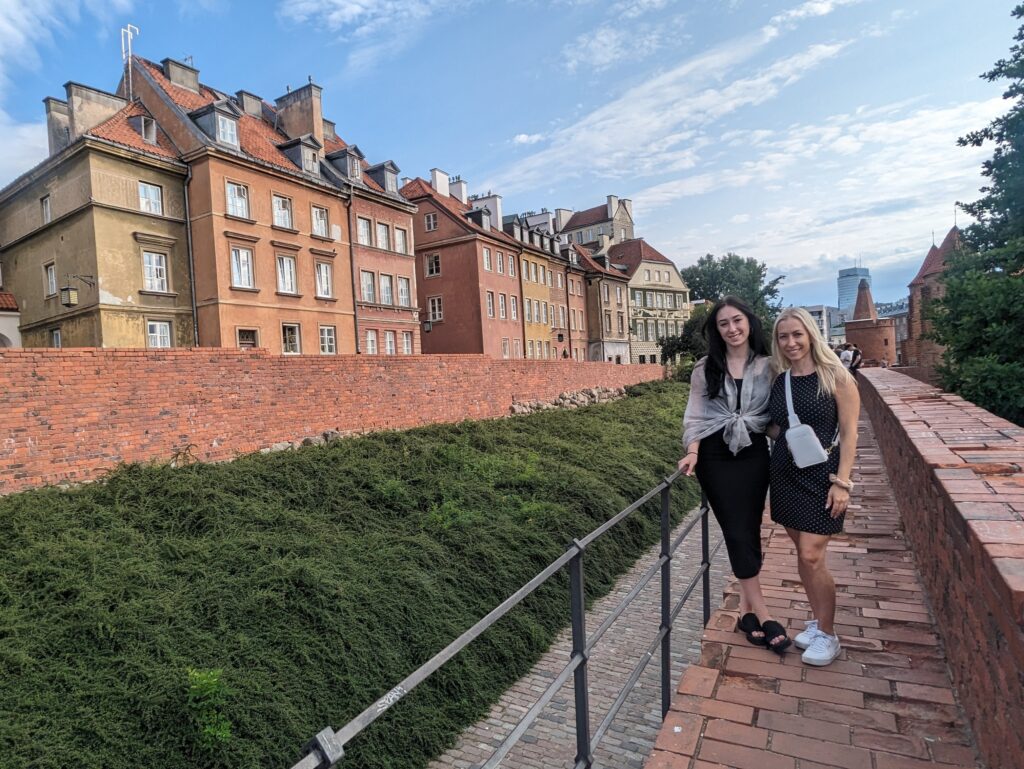
Warsaw: Stay near Old Town (Stare Miasto) or along Krakowskie Przedmieście, one of Warsaw’s most beautiful streets lined with palaces, churches, and café terraces. You’ll be walking distance from almost everything on the Warsaw portion of this itinerary. As a first timer, staying in the city center (Śródmieście) is also recommended for easy access to transit.
Kraków: Stay as close to the Main Square as possible. It’s the heart of the city and the easiest base for day trips like Auschwitz. We stayed at the Mercure which was conveniently only a 10 min walk from the train and Main Square.
Day 1: Warsaw Old Town, the Royal Route & Praga District
Mid-Morning/Afternoon: Arrive in Warsaw, drop your bags, and walk down Krakowskie Przedmieście, Warsaw’s elegant boulevard that connects the Old Town to the University and royal residences. Notice the beautiful old architecture that feels earned rather than decorative.
Stop at the Church of the Holy Cross, where composer Frédéric Chopin’s heart is literally interred in one of the pillars. His wishes were for his body to be buried in France but his heart to remain in Poland where he grew up.
Continue down the street to Warsaw University and the Presidential Palace, the official residence of the Polish President.
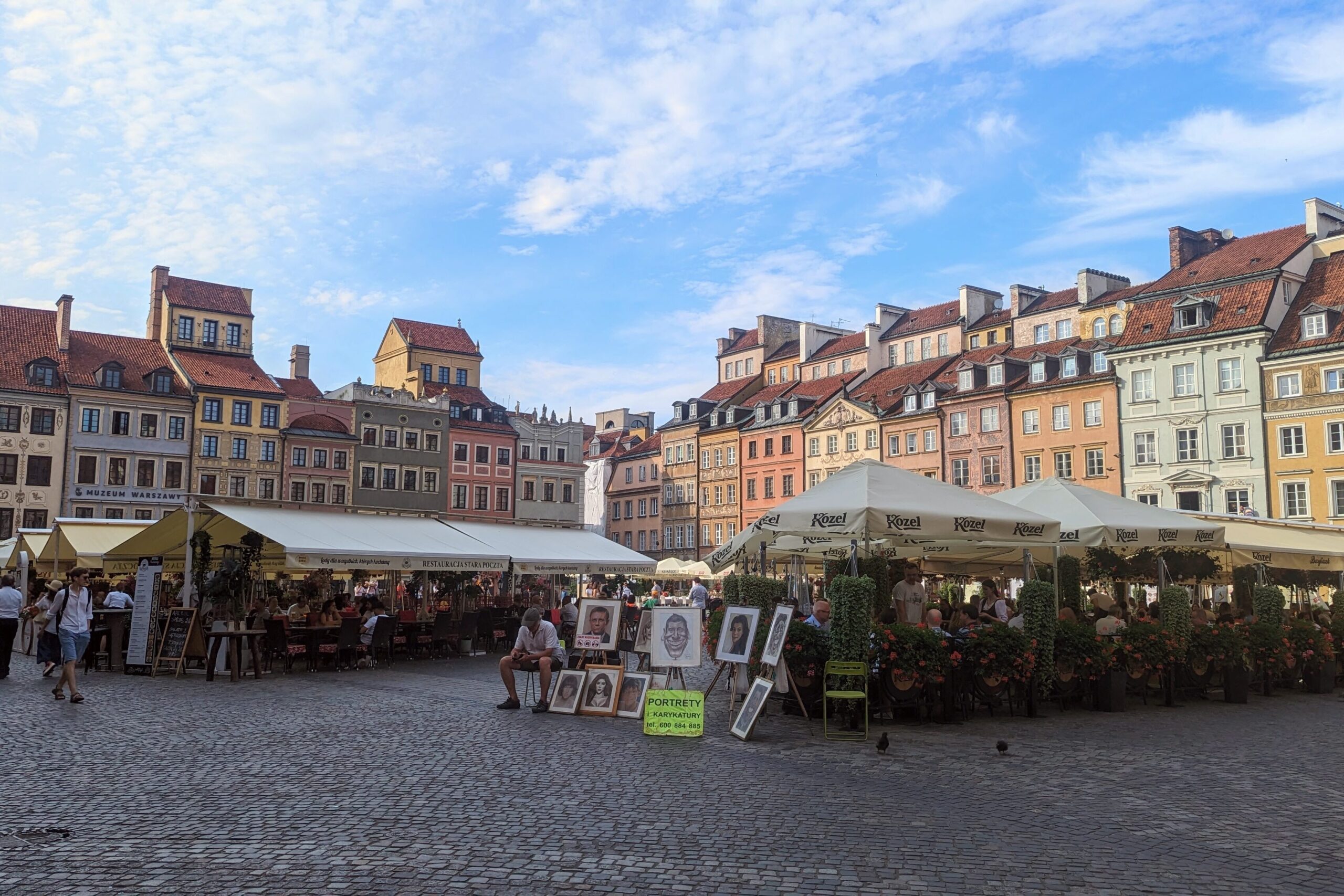
From there, head into Old Town (Stare Miasto) starting with The Royal Castle (Zamek Królewski). This was once the residence of Polish monarchs and its history dates back to the 14th century. Make your way into the main square of Old Town where you’ll find a mermaid statue in the center, the official symbol and protector of Warsaw. Over 80% of Warsaw, including all of Old Town, was demolished by the Nazis in WWII. The Poles rebuilt it brick by brick from memory, paintings, and old photographs after the war. Old Town was declared a UNESCO World Heritage Site in 1980 not for its age, but for what it represents. Now artists, vendors, and restaurants fill the square with color and noise and life. Knowing what once stood here, and what was done to erase it, makes all of it feel like something close to sacred.
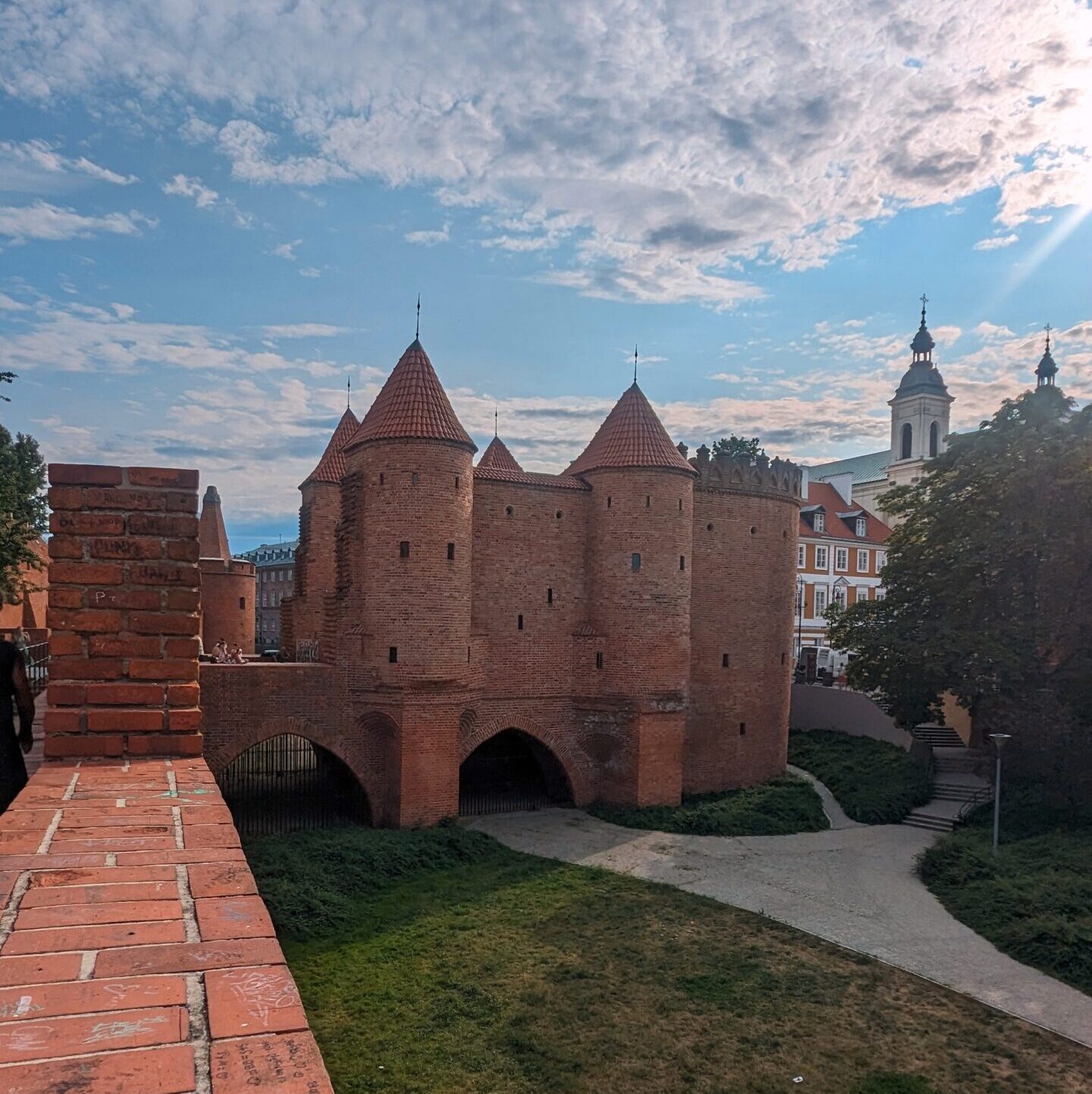
Wander through the streets until you reach the Barbakan, a 16th-century defense gate that divides Old Town from New Town. Let yourself get lost in the cobblestone streets. Have a late lunch somewhere with outdoor seating and try Żurek (sour rye soup) if you see it on the menu.
Evening: Walk along the Vistula River or cross the Kładka bridge into the Praga district; one of the few Warsaw neighborhoods that survived WWII mostly intact. Pre-war courtyards and architecture still stand here. If you’re up for it, book a tour of the Polish Vodka Museum (18+ yrs) and taste the best vodka in the world. I may be biased.
Day 2: Palaces, Parks & Panoramic Views
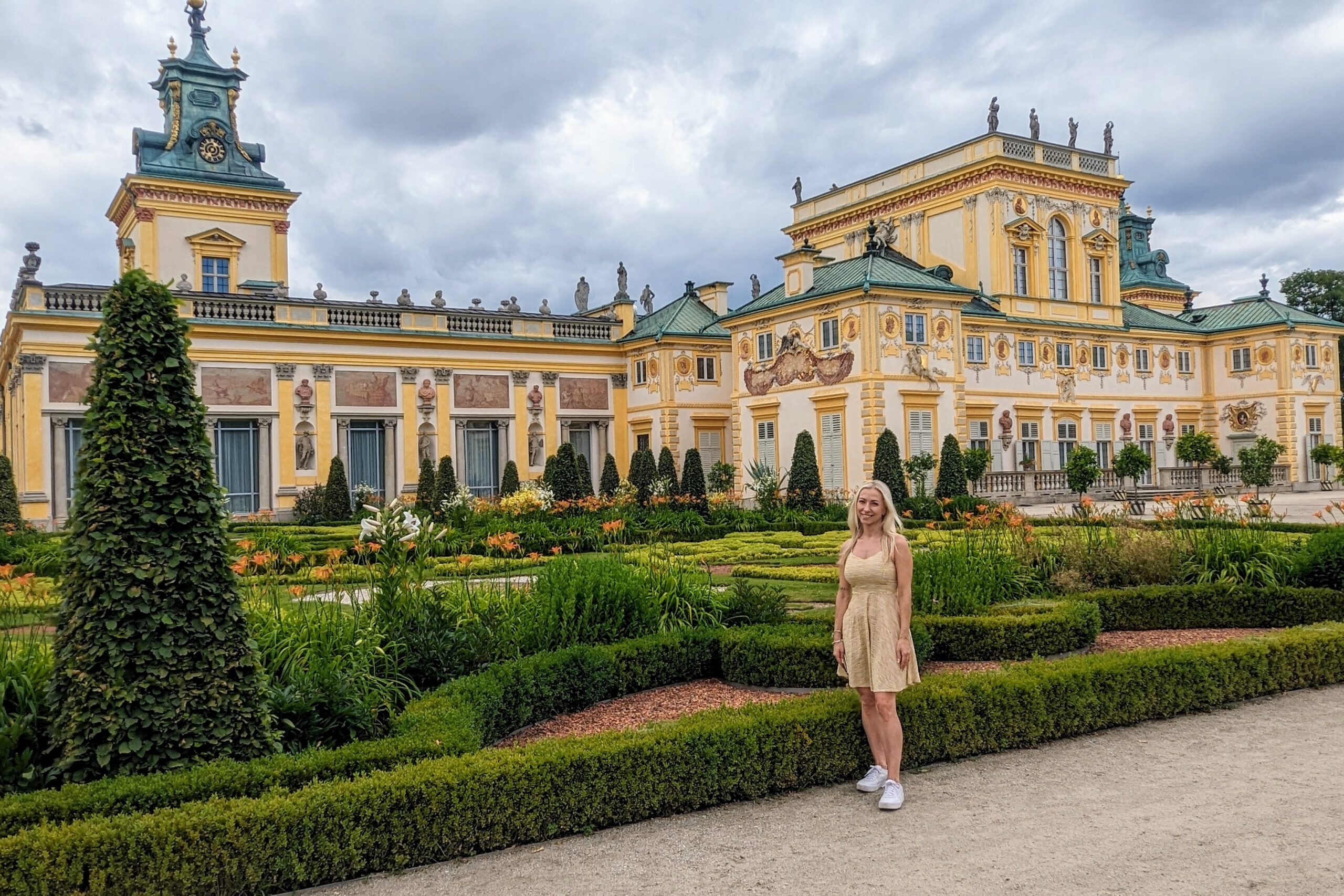
Morning: Head south to Wilanów Palace and Gardens, often called the “Polish Versailles.” This yellow Baroque royal residence is surrounded by manicured gardens that are stunning in any season. The palace interior is ornate and well-preserved, but honestly, the gardens alone are worth the trip out here.
Afternoon: Royal Baths Park (Łazienki Królewskie) is like the Central Park (NYC) of Warsaw with over 187 acres of tree-lined paths in the middle of the city, except here the squirrels are red and peacocks roam freely. There’s also a palace built on an artificial island that was originally designed to be a bath house. For Chopin fans, the park hosts free outdoor piano concerts on Sunday afternoons in the summer.
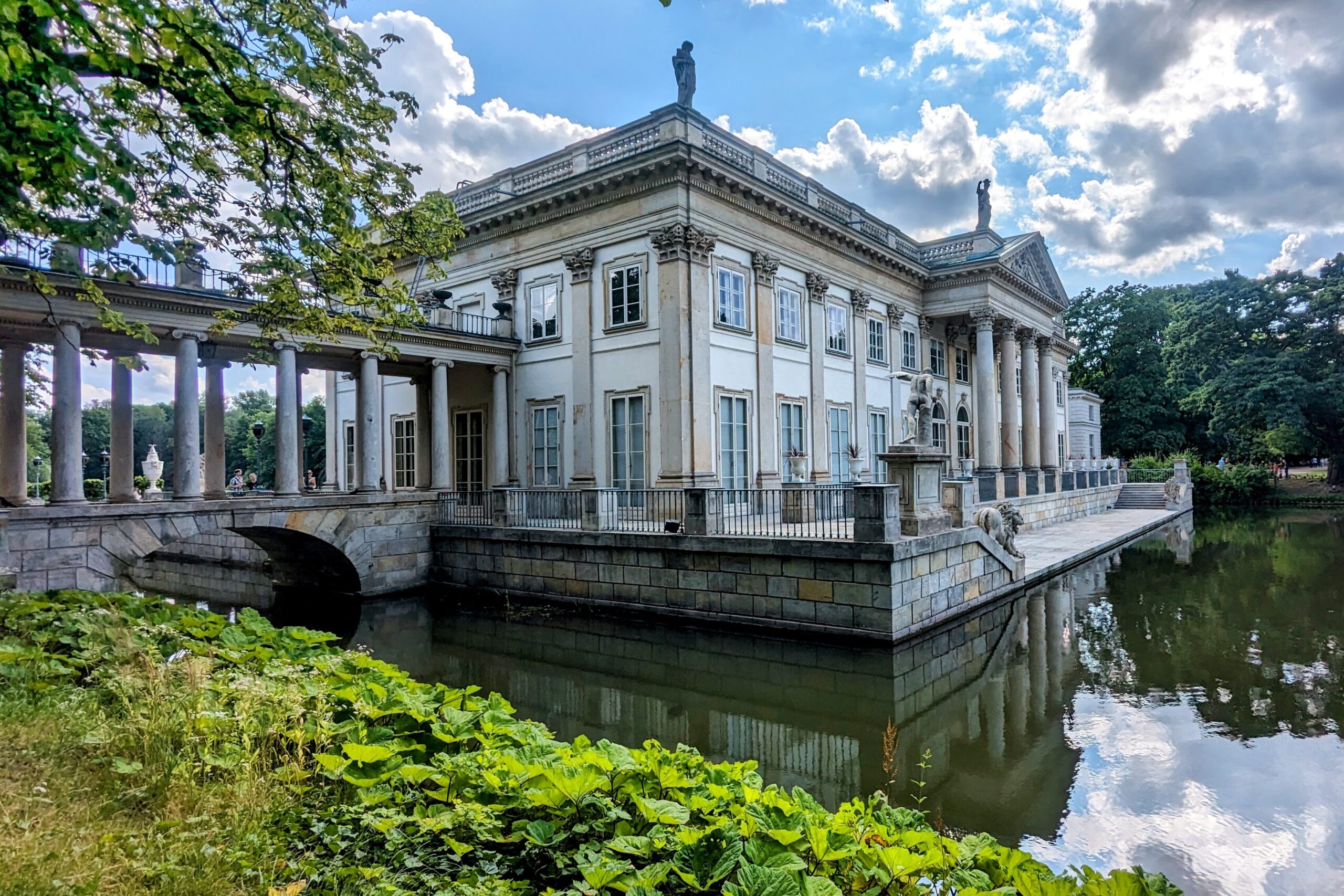
Royal Baths Park
If you’re curious about life outside the city, the Museum of the Mazovian Countryside in Sierpc is about 1.5 hrs from Warsaw where you’ll see reconstructed traditional Polish villages and farmhouses from the end of 19th century to mid 20th century. There’s also a working windmill, a manor, a tavern with an inn, a forge and a blacksmith’s cottage, and a wooden church with a belfry. We enjoyed watching all the farm animals and seeing how people used to live in the countryside. Make sure you try the traditional pickle sandwich. IYKYK. If this feels too far, spend more time at the Royal Baths Park or visit the City Zoological Garden.
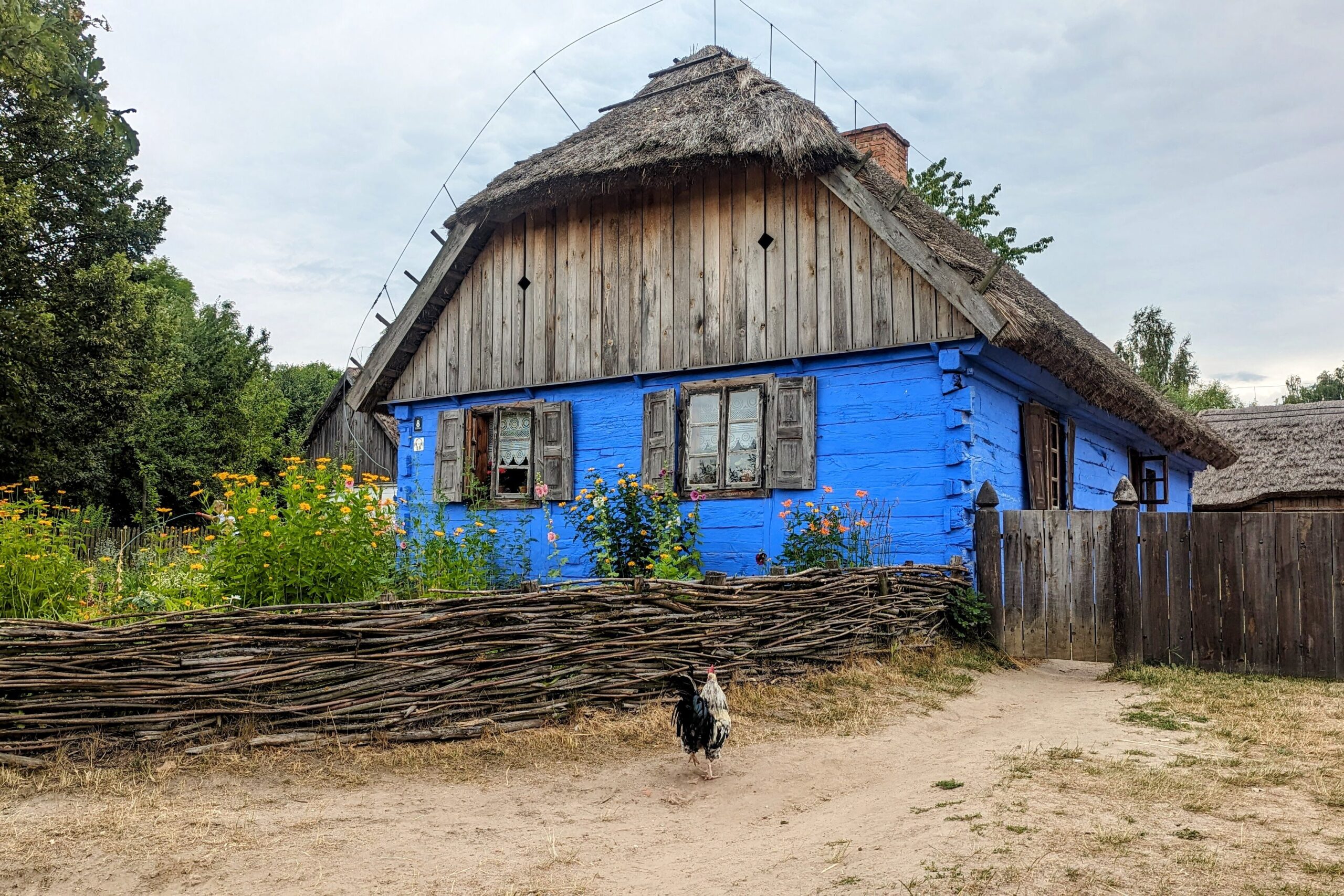
Museum of Mazovian Countryside
Evening: Visit the Palace of Culture and Science for a show or head to the observation deck for panoramic views of Warsaw.
Day 3: WWII Warsaw — History, Resistance & Remembrance
Today will be an emotional day.
Morning: Start at the Warsaw Uprising Museum, one of the most powerful museums either of us has ever walked through. The 1944 Warsaw Uprising where Polish resistance fighters fought the Nazi occupiers for 63 days with almost no outside support, is one of history’s most heartbreaking stories of courage. The museum puts you inside the story with audio, artifacts, and even a reconstructed sewer tunnel that fighters used to escape and communicate. Block 2-3 hours.
Afternoon: Visit the POLIN Museum of the History of Polish Jews. Where the Warsaw Uprising Museum is about resistance, POLIN is about a thousand years of Jewish life in Poland. The building itself is stunning, and the permanent exhibitions are immersive. This museum has won international awards for good reason.
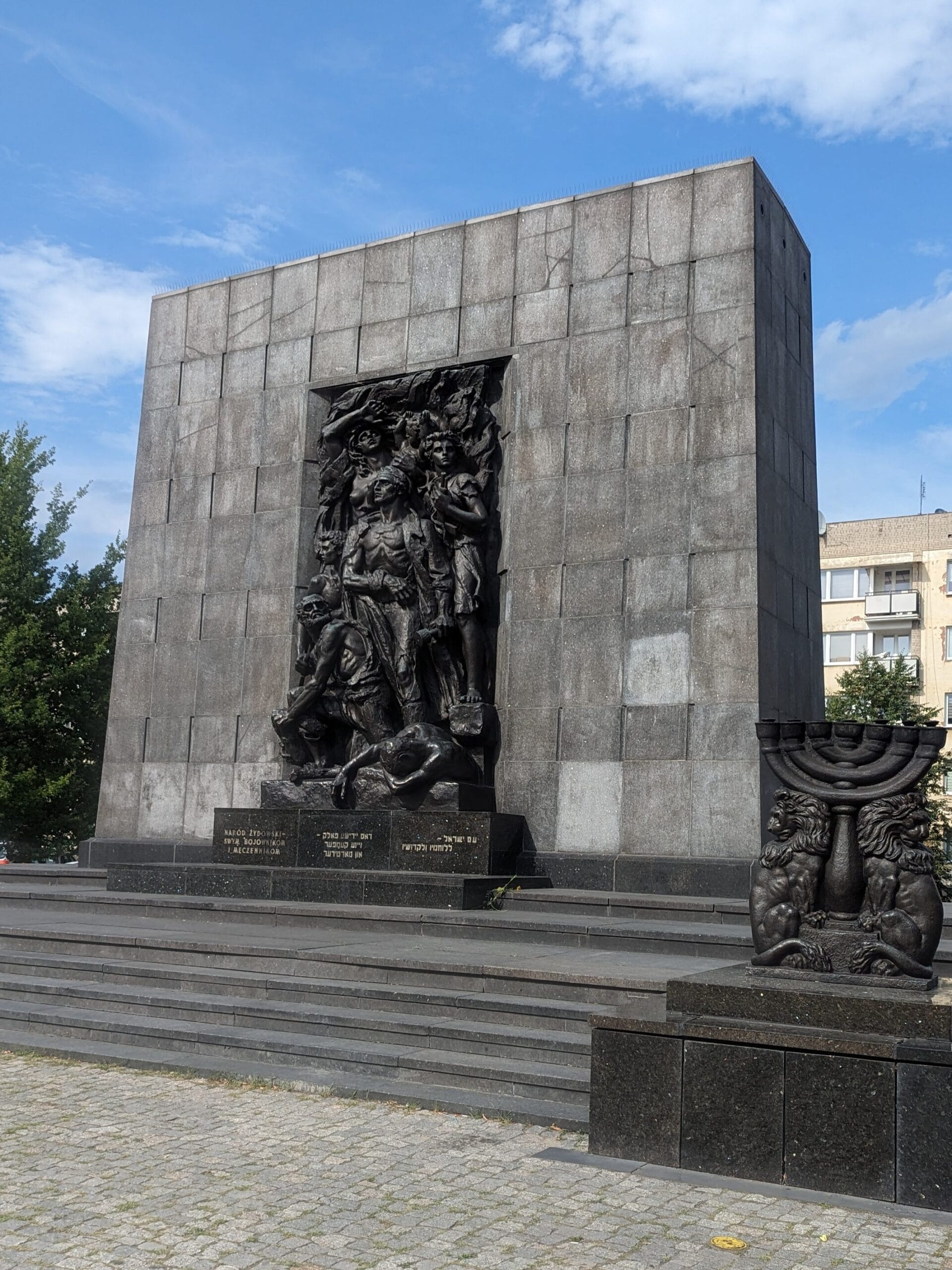
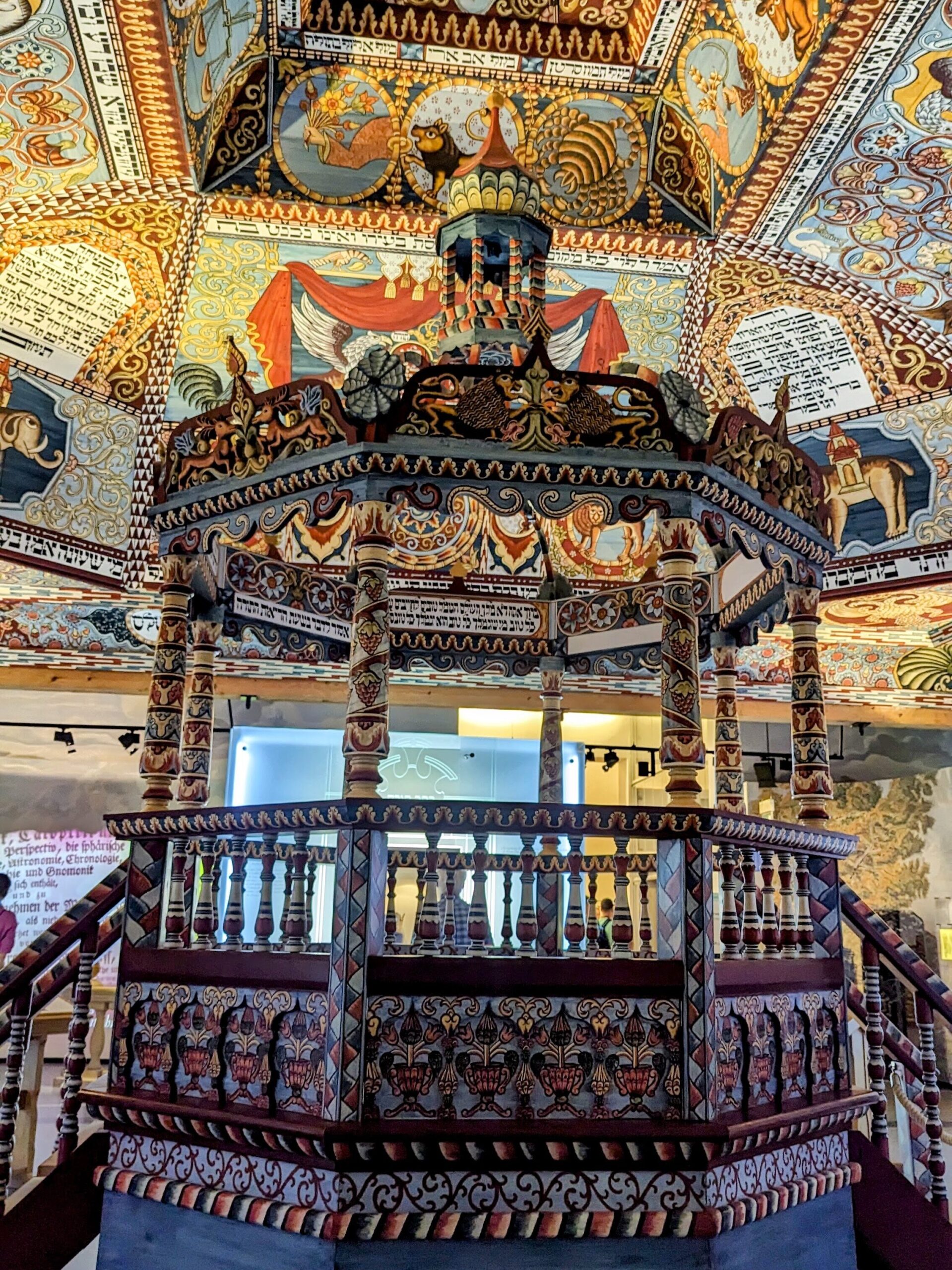
Evening: Head back to downtown Warsaw for dinner. Try bigos (hunter’s stew) or kotlet schabowy (Poland’s version of schnitzel). Both are excellent. Bar Mleczny is a popular option for authentic Polish food.
The Poles have a saying: “Polak potrafi” meaning “A Pole can do it.” After today, you’ll understand exactly what that means.
Day 4: Kraków — Medieval Squares, Jewish Heritage & a Fire-Breathing Dragon
Morning: Take the train from Warsaw to Kraków, it’s about 2.5 hours and incredibly easy to book in advance through PKP Intercity. The train is comfortable, affordable, and pleasant.
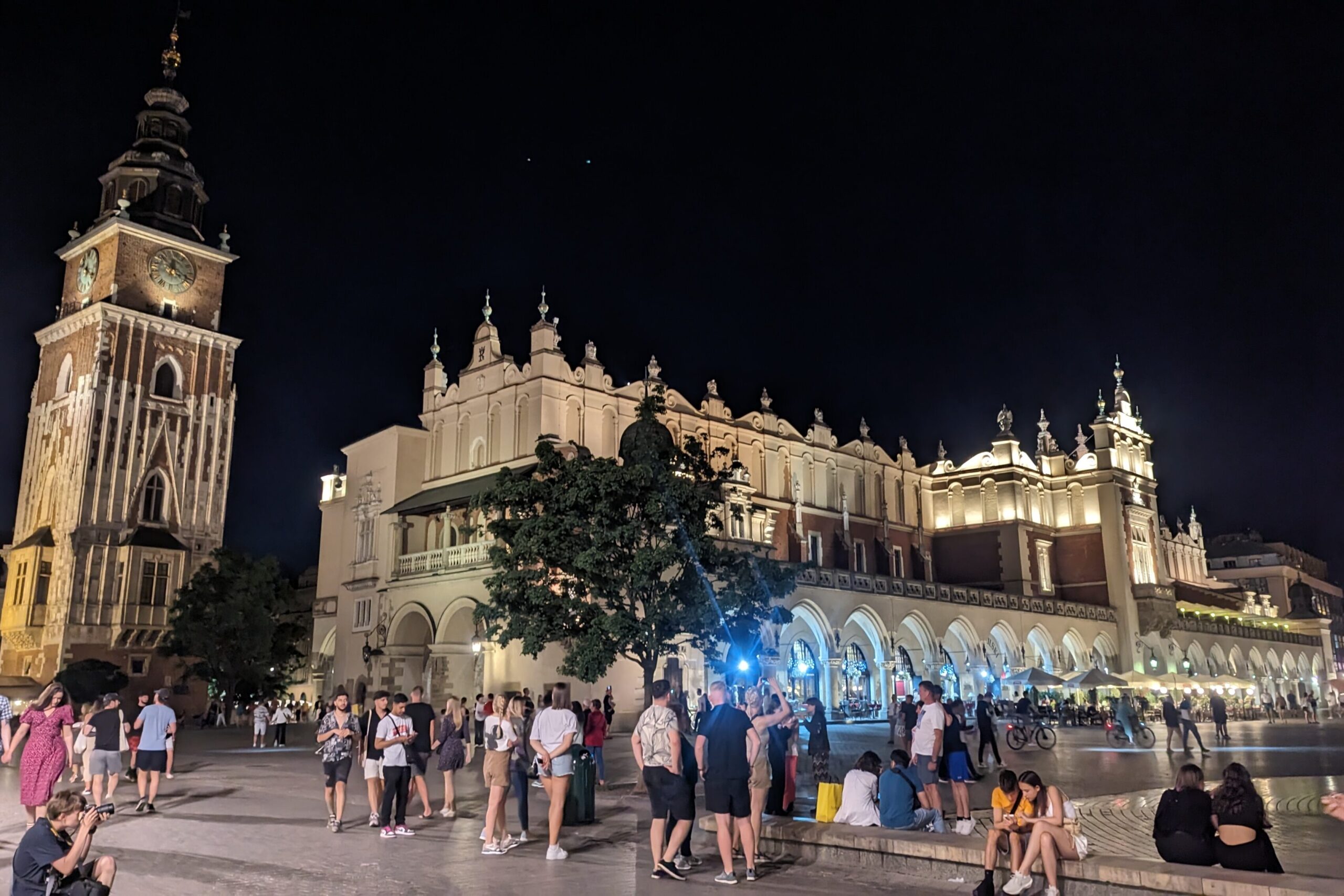
Mid-Morning: Arrive in Kraków and drop your bags. Then head straight to the Main Market Square (Rynek Główny), one of the largest medieval squares in Europe and one of the most beautiful city centers you’ll ever stand in. The square is anchored by the Cloth Hall (Sukiennice), a stunning Renaissance market hall, and the twin-towered St. Mary’s Basilica, where a trumpeter plays a melody from the top of the tower every hour in every direction and stops mid-note. The story behind that abrupt ending is worth looking up.
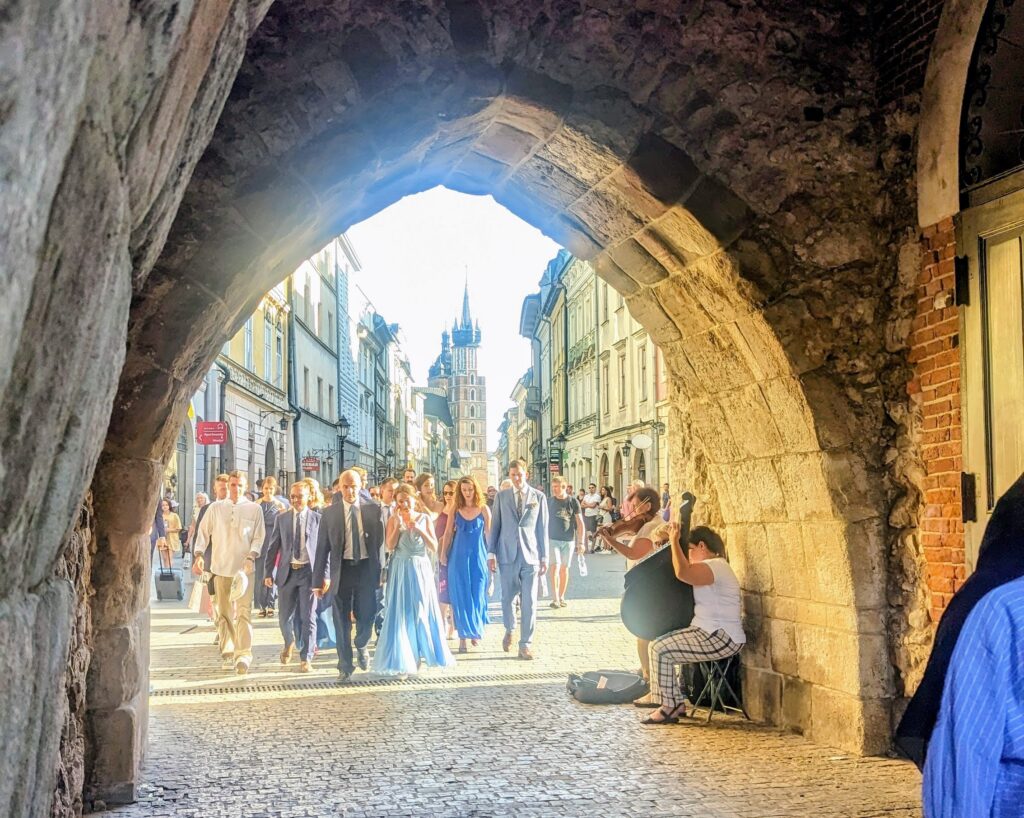
Afternoon: Wander the surrounding streets of the Main Market Square and the Kazimierz neighborhood, Kraków’s historic Jewish quarter. It’s equal parts melancholy and lively. Synagogues, Jewish bookshops, quirky cafés, and street art coexisting in a neighborhood that has seen extraordinary things. If you want to shop and love jewelry, you’ll find lots of pieces with amber from the Baltic Sea ranging in color from light yellow to dark orange and even green.
Explore the 14th Century Wawel Royal Castle and don’t miss the nearby fire breathing dragon statue. According to Polish folklore, the dragon terrorized the people of Krakow until they tricked it into eating sulfur.
Evening: Kraków is full of restaurants housed in medieval cellars literally underground, arched brick ceilings, and candlelight. Find one and stay a while.
Day 5: Auschwitz-Birkenau — A Day That Will Stay With You
There is no way to prepare you for this day, and no way to write about it without it feeling inadequate.
Morning: Auschwitz-Birkenau is about 90 minutes from Kraków by bus or organized tour. Book in advance especially if you want a guided tour, which I’d strongly recommend. The guides are incredibly knowledgeable and traveling with them makes an emotional day less stressful.
Auschwitz I and Auschwitz II-Birkenau are separate camps, and most tours cover both. Allow a full day. Wear comfortable shoes and bring water. There are no right words for what you’ll see, but seeing it matters. Never forget history.
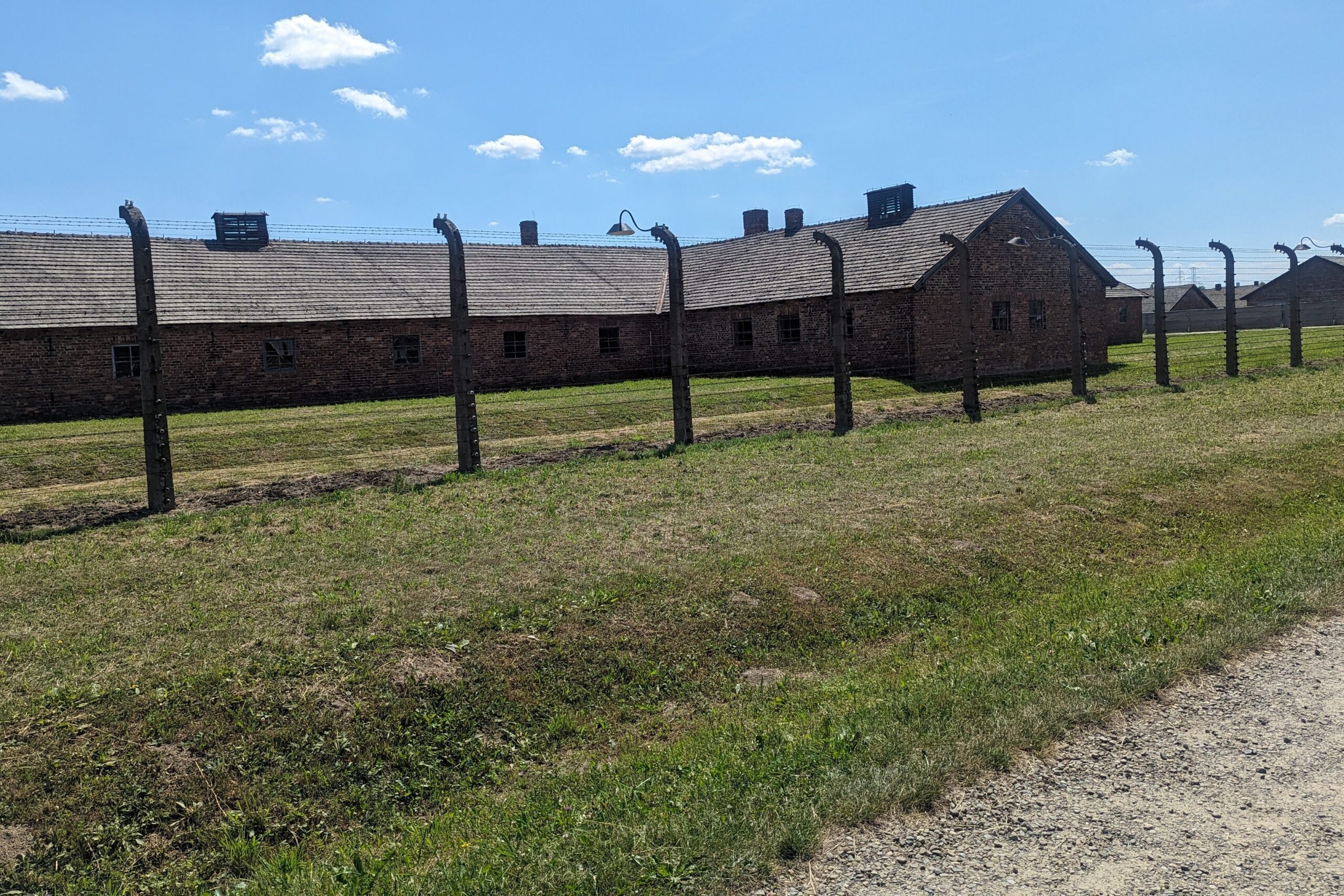
There are now homes very close to Birkenau which we found disturbing. We didn’t speak much on the bus back to Kraków.
Evening: Walk back through the Main Square one last time. Watch the city come alive; people dining and clinking glasses (na zdrowie!), kids chasing pigeons, a violinist playing, and horse-drawn carriages passing by.
Poland has been through things most of us cannot comprehend, and yet here it is: full of life, beauty, and an almost defiant joy. It is a country that has refused, over and over again, to be erased. Instagram can’t show what it feels like to stand here knowing what this country and its people have survived. You have to come and feel it for yourself. You will leave changed.
Frequently Asked Questions About Visiting Poland
How many days do you need in Poland? Five days gives you a strong introduction to both Warsaw and Kraków. If you want to go deeper with more day trips, slower pace, or additional cities like Gdańsk or Wrocław, plan for 7–10 days.
Is Poland safe for tourists? Yes. Poland is considered one of the safer countries in Europe for travelers. Standard city-travel awareness applies, but it’s generally a very welcoming destination.
What is the best way to get from Warsaw to Kraków? The train is the best option: fast, affordable, and comfortable. Book through PKP Intercity in advance, especially in peak season.
Is Auschwitz worth visiting? It is not a question of worth, it is a question of bearing witness. If you are able to go, go. Book a guided tour in advance and allow a full day for both camps.
What language do they speak in Poland, and do people speak English? Polish is the official language, but English is widely spoken in Warsaw and Kraków, especially in tourist areas, hotels, and restaurants.
What currency does Poland use? Poland uses the Polish złoty (PLN), not the euro. Always pay in the local currency when using a credit or debit card to avoid the exchange rate fee.
What food should I try in Poland? Start with pierogi, Żurek (sour rye soup), bigos (hunter’s stew), kotlet schabowy (thin breaded pork chop), and pączki (Polish doughnuts filled with rose jam that will ruin every other doughnut for you).
Have you been to Poland or is it on your bucket list? Drop a comment below, we’d love to hear from you!

What an excellent itinerary!! As a fellow Pole I think these are great suggestions! And now I’m craving all those delicious Polish dishes 😊
Dziękuję Dorota! We can’t wait to go back and explore more!