
What comes to mind when you think of Barcelona? If you answered tapas, tequila and nightlife you’re not wrong but there is so much more to this beautiful city. If you love history, art and architecture, you’ll have plenty to see here between the works of Antoni Gaudí and the Picasso museum. If you love the beach, there are plenty within a bus ride. With the right itinerary you can enjoy 3 days in Barcelona without feeling like you missed out.
Day 1: Explore the Works of Gaudí
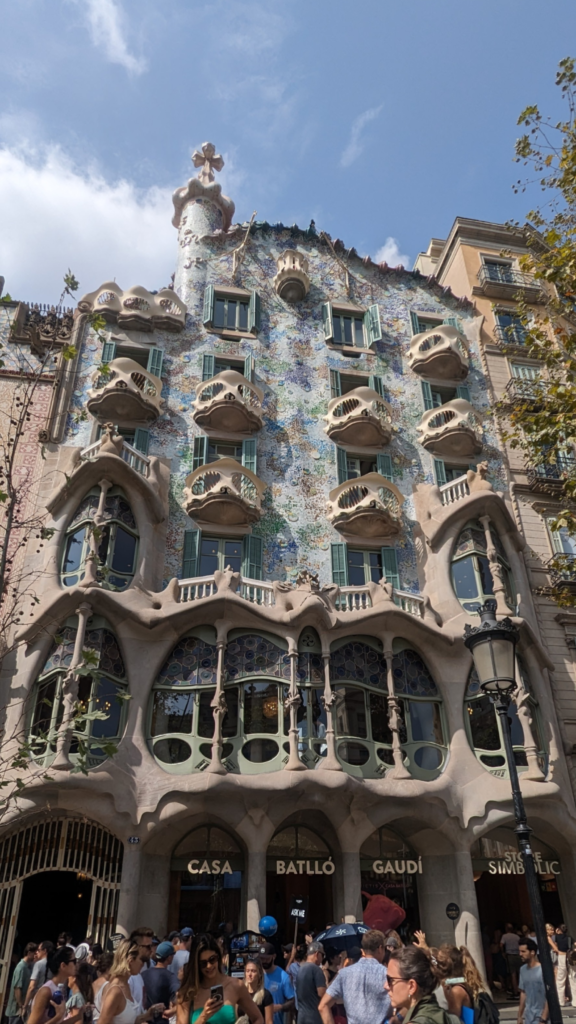
Passeig de Gràcia is known as one of Spain’s most expensive streets but you’ll find more than just premier shopping and dining. Under a mile long, here you’ll also find Casa Batlló and Casa Milá, designed by the famous architect Antoni Gaudí. The patios on Casa Batlló reminded us of masquerade masks and Casa Milá is a building with no straight lines. If you have time to go inside, get tickets for Casa Batlló.
La Sagrada Familia
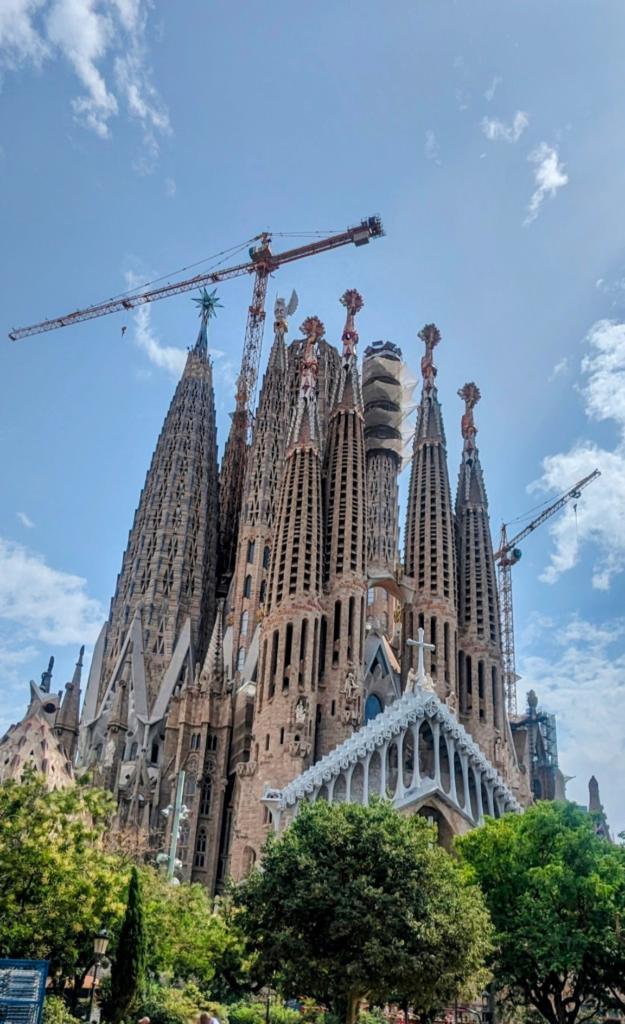
European churches are stunning but La Sagrada Familia, architected by Gaudí, is an absolute work of art. The exterior is made up of carvings that showcase the life of Jesus Christ with three main facades depicting bible stories. A nativity scene is on the east facade, passion on the west, and glory on the south. The intricate sculptures and carvings make the Church come alive and is a must see when in Barcelona. The main structure is scheduled to be completed by late 2026. The interior is white marble with massive stained glass windows and two towers are accessible with amazing views of Barcelona.
Park Güell
In the upscale La Salut neighborhood, a bit further from the other Gaudí landmarks is the fairytale-like Park Güell. We walked here after visiting La Sagrada Familia, but would highly recommend taking a bus or taxi instead because of the incline and stairs. Seriously, getting here on foot is not easy especially in the humid summer heat.
Entrepreneur Eusebi Güell commissioned Gaudí to design the park which was originally planned as a luxury housing development but only two homes were built after 14 years of construction. Gaudí lived in one of the homes which later became a school and is now the Gaudí House Museum. The park officially opened to the public in 1926 and was named a UNESCO World Heritage site under “Works of Antoni Gaudí” in 1984.
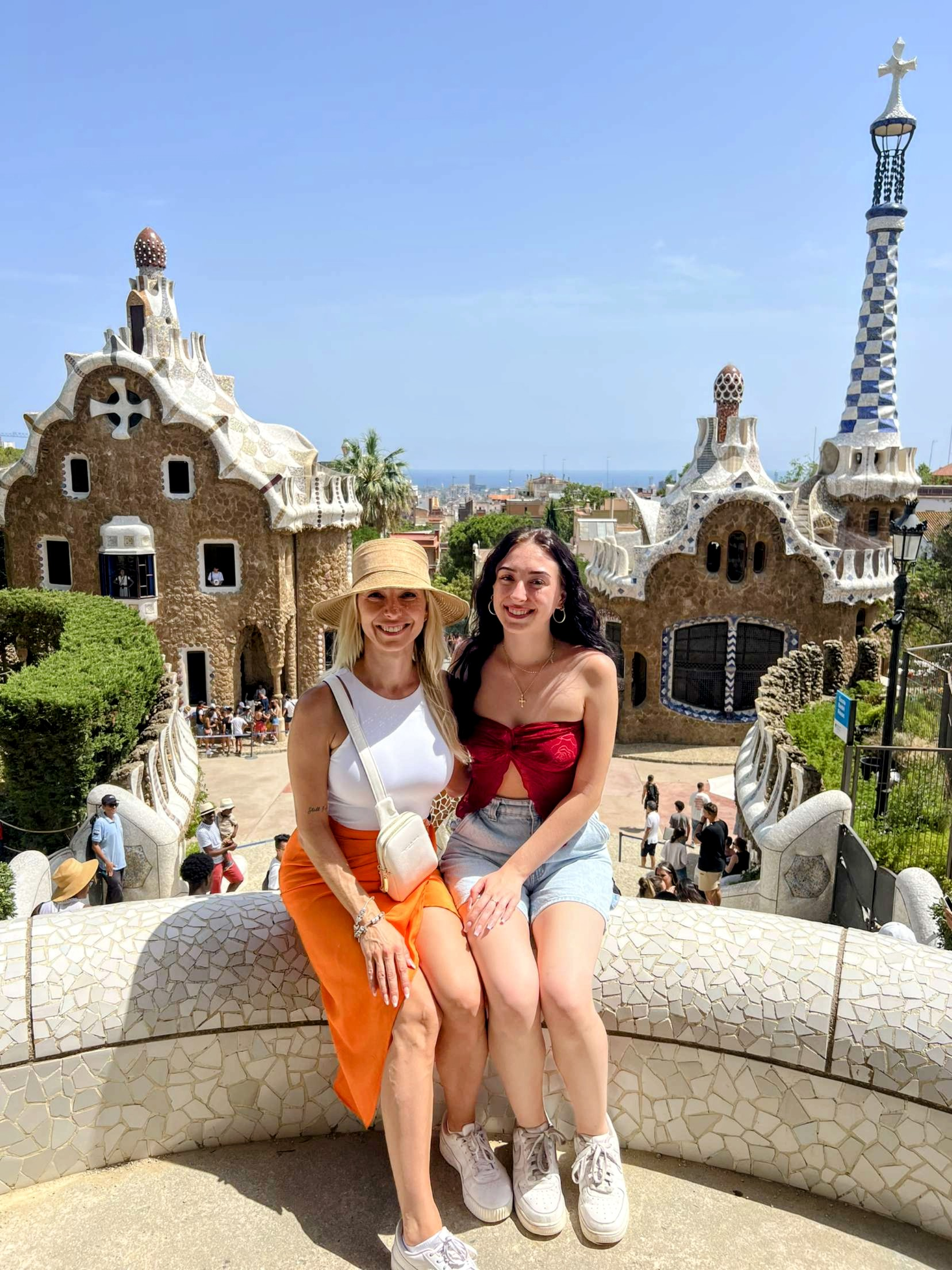
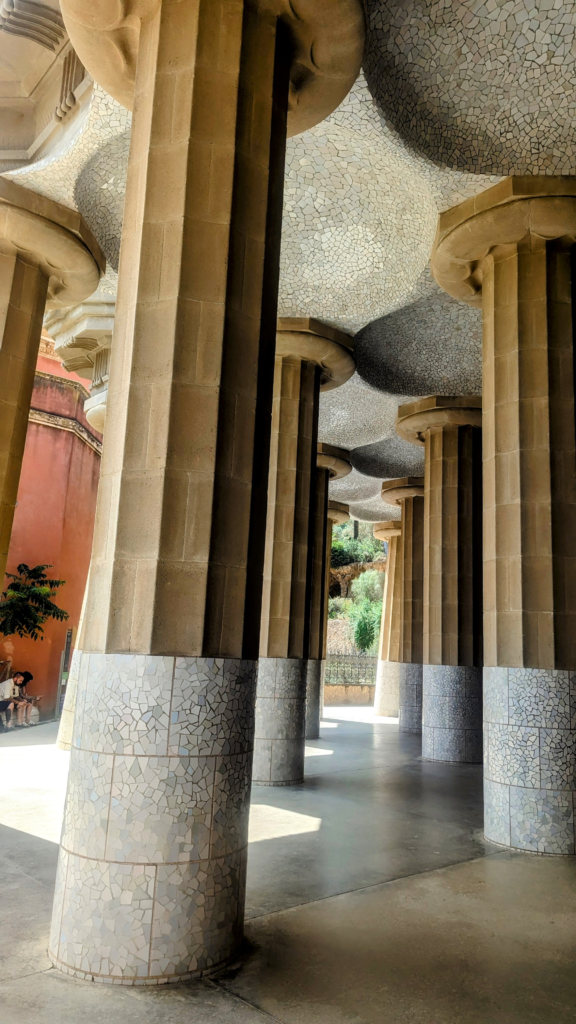
Situated on Carmel Hill, Park Güell offers a panoramic view of Barcelona from the Nature Square aka Greek Theatre. Throughout the park, Gaudí’s incredible imagination is displayed in vibrant colors and whimsical shapes. Serpentine bench is covered in colorful mosaics and sits at the edge of Nature Square, a great photo op. The two buildings that look like gingerbread houses are now a museum but once the porter’s lodge. Below the Nature Square and Serpentine Bench is the Hypostyle Room which is filled with 86 columns holding up a domed mosaic ceiling. The dragon stairway in front is a twin staircase with a dragon or lizard fountain in between.
End the first day with tapas and drinks on any of Barcelona’s beautiful rooftop bars. Some popular ones are Terraza de Vivi, Alaire Rooftop, and Rosellon Terrace at the Sercotel Hotel.
Day 2: Outdoor markets, Gothic architecture, Picasso, and the Beach
La Rambla
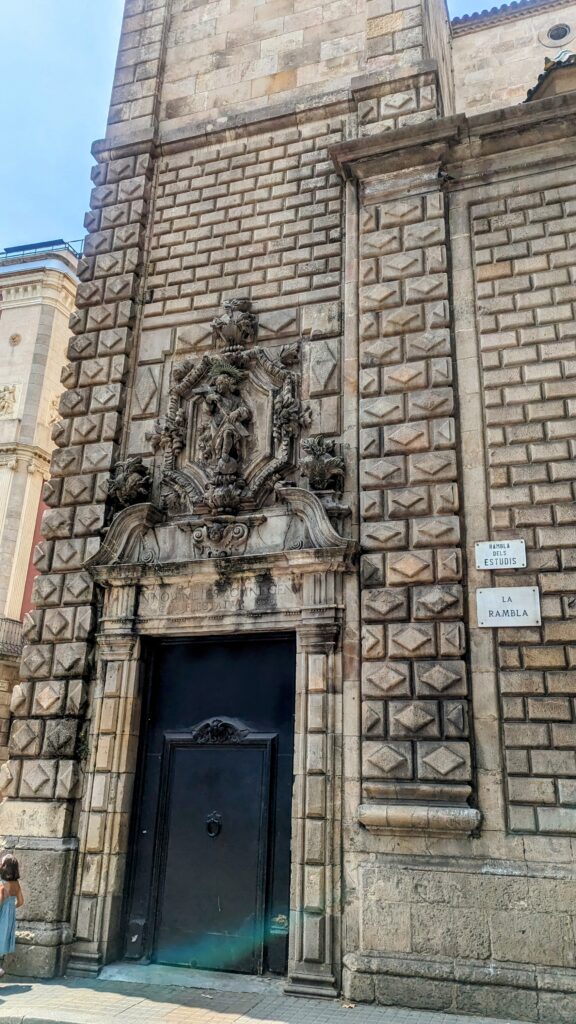
About ¾ mile of La Rambla is mostly for pedestrians with shopping, dining and entertainment lining both sides of the street, and vendors set up in the middle. As with any tourist-heavy area, beware of pickpockets here. Off to the side is La Boqueria Food Market, a great place to stop for lunch. Fresh seafood, meats, fruits and vegetables, desserts and pastries all under one roof. Get dressed up to see an opera at Liceu Theatre or a flamenco show at Tablao Cordobes.
Gothic Quarter
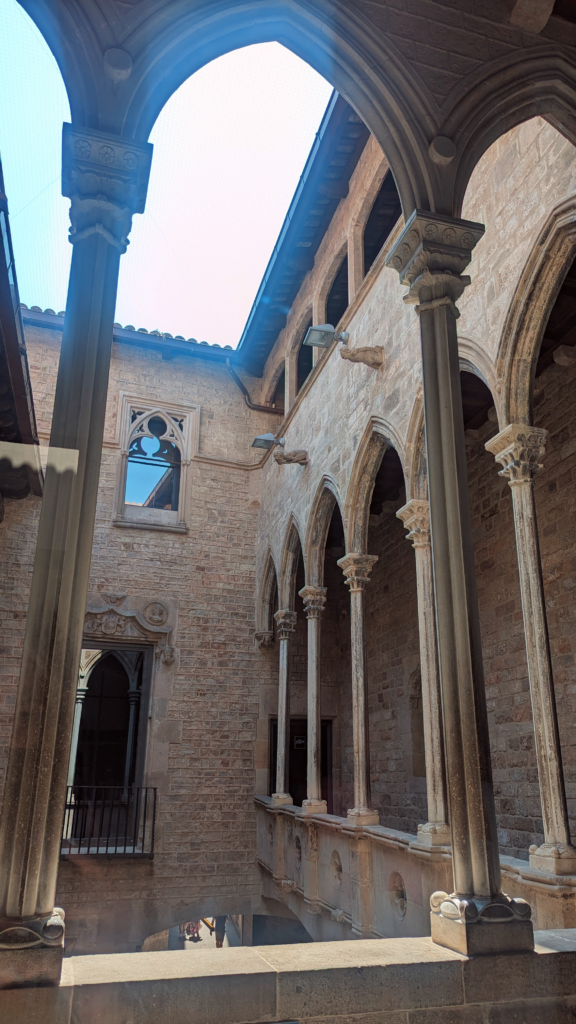
Near La Rambla is the Gothic Quarter with Roman ruins, medieval buildings, and trendy bars. Points of interest are the Barcelona Cathedral, Pont del Bisbe (Bishop’s bridge), Plaça de Sant Jaume where the city hall building is, Basilica of Santa Maria del Mar, and the Picasso museum. It makes sense to visit in that order if you’re headed from La Rambla.
Construction on the Gothic style Barcelona Cathedral finished in 1298 with two side towers being added in the late 19th century. Climb to the roof for amazing views of the city. Pont del Bisbe is an ornate neo-gothic style bridge built in 1928, connecting a Catalan government building and the Catalonian President’s residence. (Barcelona is the capital of Catalonia, a separate autonomous region in Spain) There’s a small skull pierced by a dagger underneath the bridge and it’s believed that if it’s removed, the city will fall. Plaça de Sant Jaume is the center of the Gothic Quarter and where many events and festivals take place. Barcelona City Hall is on one side of the square and directly across is the Catalan government building. Another church in the Gothic Quarter is the Basilica of Santa Maria del Mar, built in the 14th century and completed in just 55 years. Lastly, art lovers should see the extensive collection of Pablo Picasso’s artwork at the Picasso Museum (closed Monday’s).
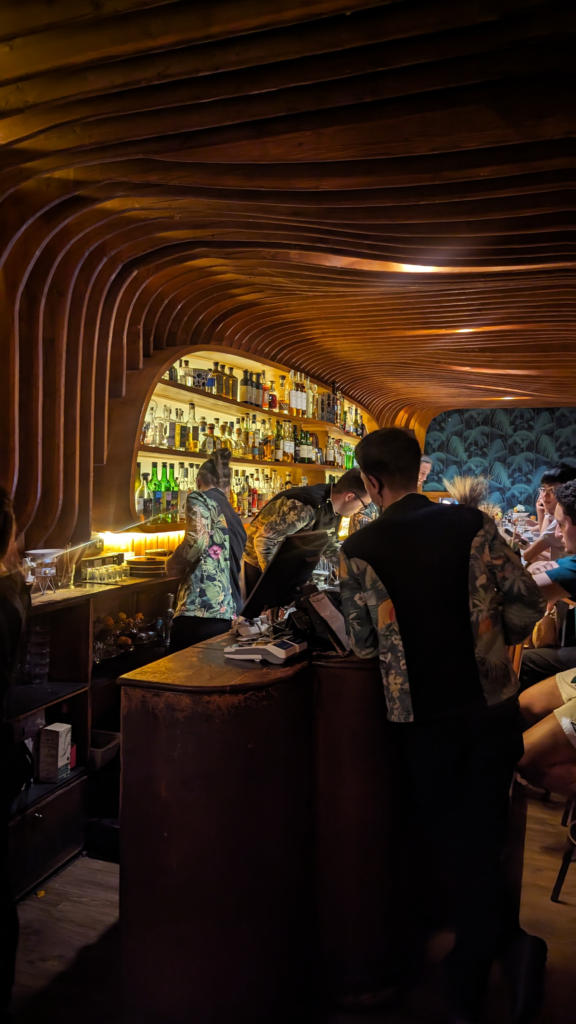
Stop for a late lunch or early dinner, then head over to Paradiso for a unique cocktail experience. The bar is a speakeasy, hidden behind a meat freezer in a deli. Same day reservations were possible when we went.
Barceloneta Beach
About a 15min walk or 7min car ride away is Barceloneta beach where you’ll find more food and alcohol vendors as well as restaurants. Walk along the beach or sit and relax for a while before heading back to the hotel. Depending on where you’re staying, end the night with gelato at De La Crem. When we visited in July, the line was wrapped around the building but moved quickly.
Day 3: Montserrat or Montjuïc
A Montjuïc cable car offers one of the best views of Barcelona and brings you to the top of a mountain where you’ll explore Montjuïc Castle and take in 360 degree views. At night the Magic Fountain of Montjuïc lights up in a beautiful display but make sure to check the website for times.
If you have a full day and feel like traveling a bit further, visit Montserrat. A must see is the monastery which you can get to by train then transfer by cable car, but it is recommended to book a tour. Plan on 4 to 6 hours for visiting the monastery, museum, farmers market, as well as taking in the views. If you love wine, there’s also several wineries and a Cava tour.
Don’t let a time crunch stop you from traveling. If you’re already in Europe it is easy to get around from one country to another, and this 3 day itinerary for Barcelona gives you all the highlights. If you’ve been to the area and have suggestions, please let us know in the comments. Happy travels!
OMG!!! Soooo many great recs and DETAILED itineraries. I know where I’m checking once I book my trip to Paris! Thank you for sharing all the goods!!